

A player receives the ball with a defender approaching. Outdoors, there may be room to push it ahead and run. In a gym, the boundary is only a few steps away. Now the player has a different problem to solve.
Turn? Protect the ball? Find a teammate?
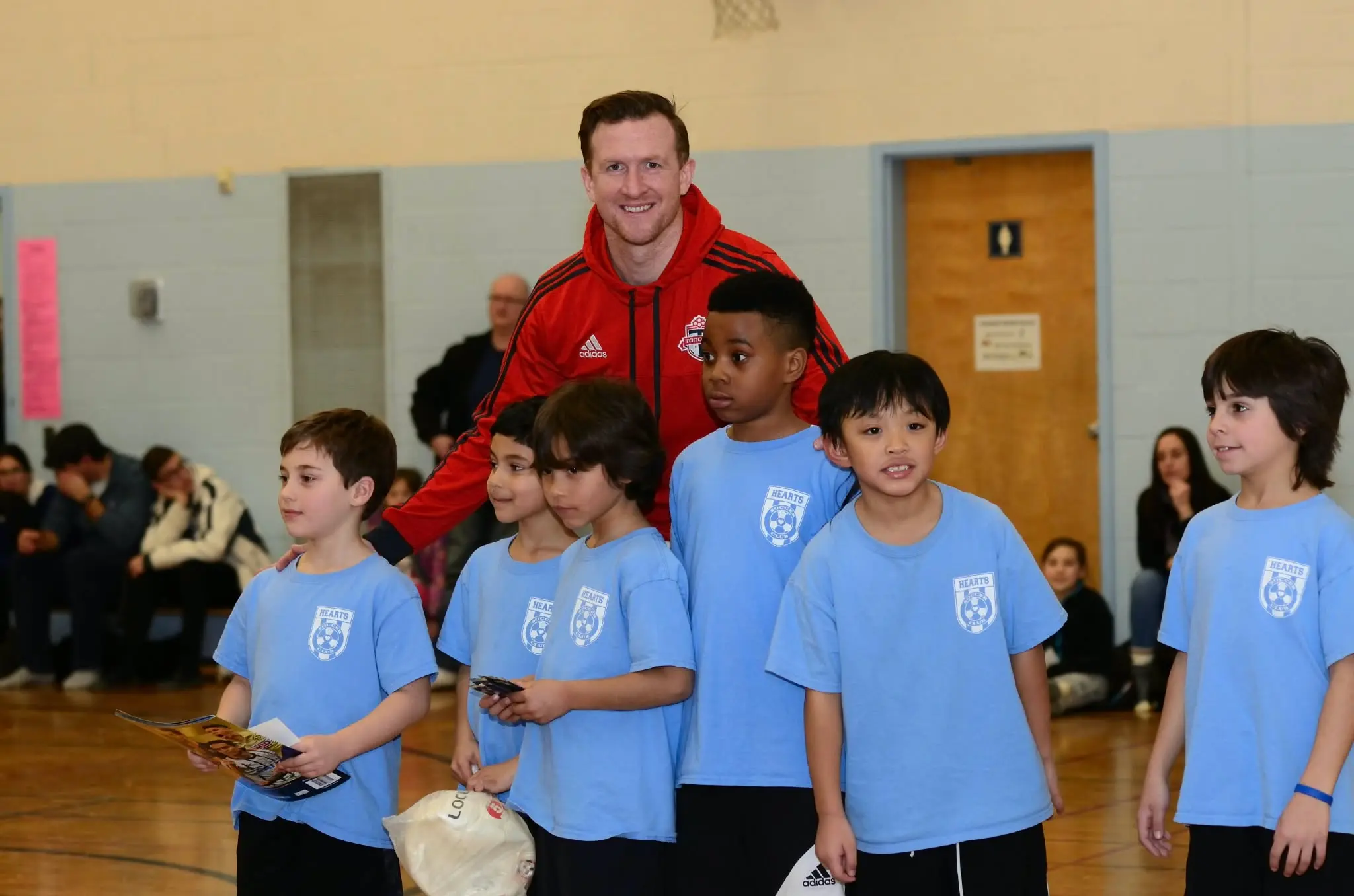
That moment helps explain the value of gym soccer. For North York Hearts families preparing for indoor play, a smaller space can offer a worthwhile learning environment when activities suit the players.
Why a smaller game changes the challenge
Limited space gives players less time to control and release the ball. FIFA’s futsal guidance highlights the importance of quick, efficient passing and choosing the right option in this environment. FIFA Training Centre: Passing to keep possession
Futsal is a distinct form of soccer with its own laws and ball specifications. A gym session can use similar small-sided learning principles without being a formal futsal program.
Imagine a three-against-three activity. After passing, a player stays behind a defender and cannot receive the ball again. Moving a few steps sideways opens a passing lane. The lesson becomes visible: helping the team means moving into a useful position, even without the ball.
When the gym can be especially useful
For close control, short combinations, and receiving under pressure, a carefully designed gym session can offer advantages over a larger, more spread-out game. Players face situations that ask them to use something other than a long run into open space.
But the floor alone does not create those benefits. Player numbers, boundaries, coaching, and time spent actively playing matter. Smaller is not always better: an overcrowded activity can leave beginners with too little room to succeed.
These same training ideas can also be used on turf. Larger playing areas offer additional opportunities to practise longer passing, runs into space, and team shape. Gym and turf sessions can serve different parts of a player’s development.
What progress looks like
At the next session, watch for a player who looks around before receiving, controls the ball within reach, or moves again after passing. A successful turn away from pressure can be as revealing as a goal.
Players can take one question into training: “Where could I move to help the person with the ball?” Follow the coach’s instructions and look for chances to try it.
Afterward, parents can ask, “What did you figure out today?” Give the answer room to be simple. Learning often begins with noticing one moment that went differently.
A gym may offer less space to run, but a well-planned session can give players plenty to think about.