

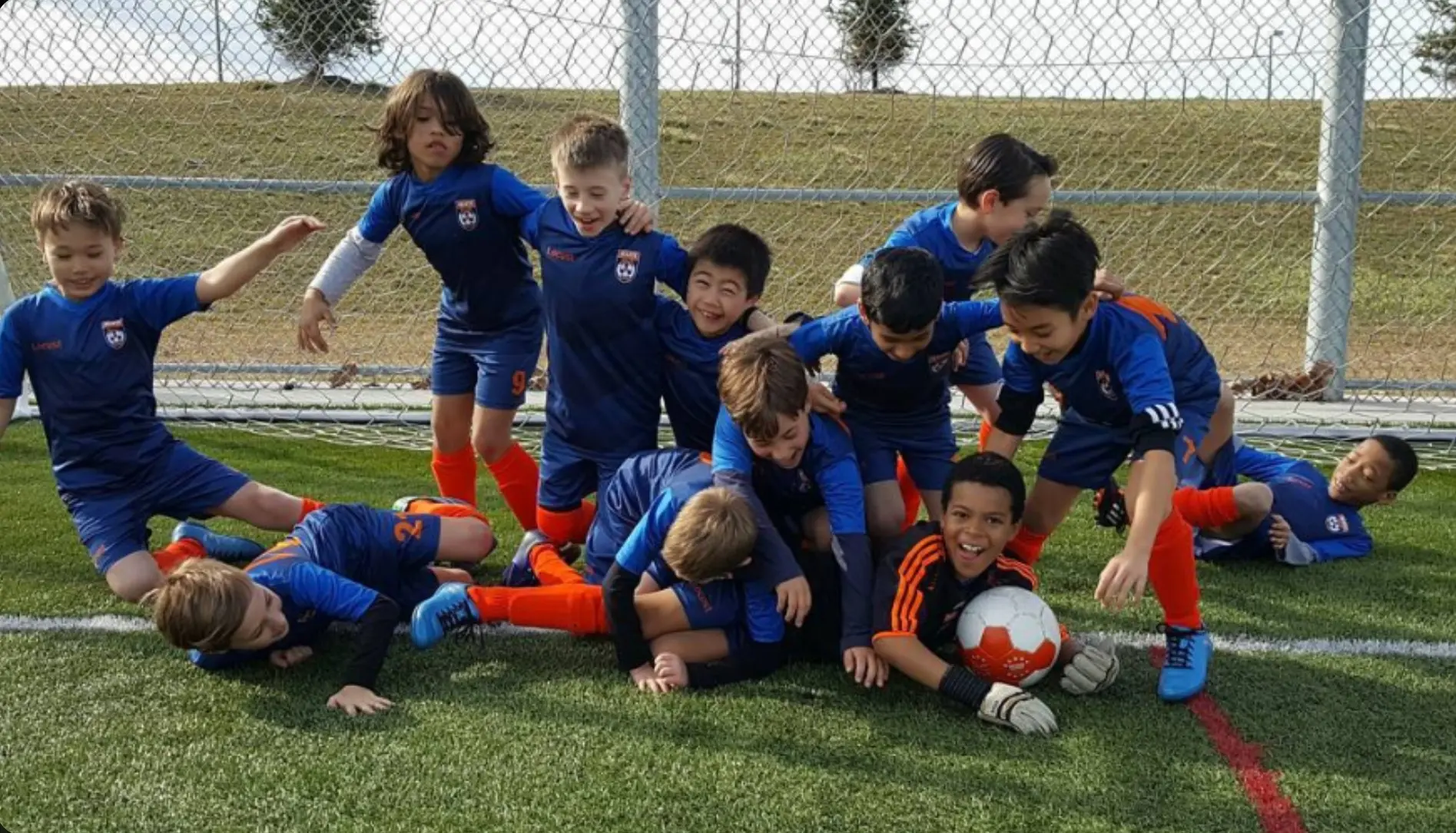
“How was training?” “Good.”
For many soccer families, that is the entire conversation. It does not mean nothing happened. A player may have tried a new turn, found a passing option, or finally understood an activity without knowing how to explain it afterward.
A three-line progress journal gives that conversation a simple starting point. North York Hearts players can try it during winter training or at any point in the year. A notebook, a phone note, or a brief chat will do.
Something I tried
Begin with an action: “I tried passing with my other foot.” “I called for the ball.” “I tried turning away from the defender.”
The attempt counts even if the outcome was untidy. Let the player choose the moment rather than selecting the one you think they should discuss.
Something I noticed
Next, describe what happened: “When I looked up earlier, I saw my teammate.” “My first touch went too far.” “I stayed still after passing.”
Parents can listen without correcting every observation. If the player is unsure, try one prompt: “Was there a moment when you had to make a choice?”
Sometimes the answer will be about confidence, friendship, or understanding instructions. Those experiences belong in the conversation too.
Something I want to try next
Choose one action the player can attempt while following the coach’s instructions. “Move into space after I pass” is useful because it describes a decision. “Score three goals” depends on teammates, opponents, and opportunities as well.
Here is a complete example:
- I tried: receiving with my other foot.
- I noticed: I could control it when I slowed down.
- Next time: I want to try it again when someone is closer.
One next step is enough. The journal should not become a list of everything to fix.
Look back without giving grades
After a few weeks, invite your child to reread an entry. Does that challenge feel different now? Is there a question they would like to ask the coach?
Progress will not always follow a straight line. A harder activity or unfamiliar opponent can make a familiar skill feel difficult again. Leave room for that in the conversation.
Keep it optional and player owned
Ask whether your child wants to reflect, and choose a time that suits them. Some need a quiet ride home first. Younger children might draw a picture or share just one sentence.
Keep entries private unless the player wants to share them. If it starts to feel like homework, simplify it or take a break.
The aim is to help a child recognize their own learning. Sometimes one sentence about a small discovery says more than the final score.